Tabitha “Tabby” Stoecker: From Circus Performer to Olympic Gold Champion
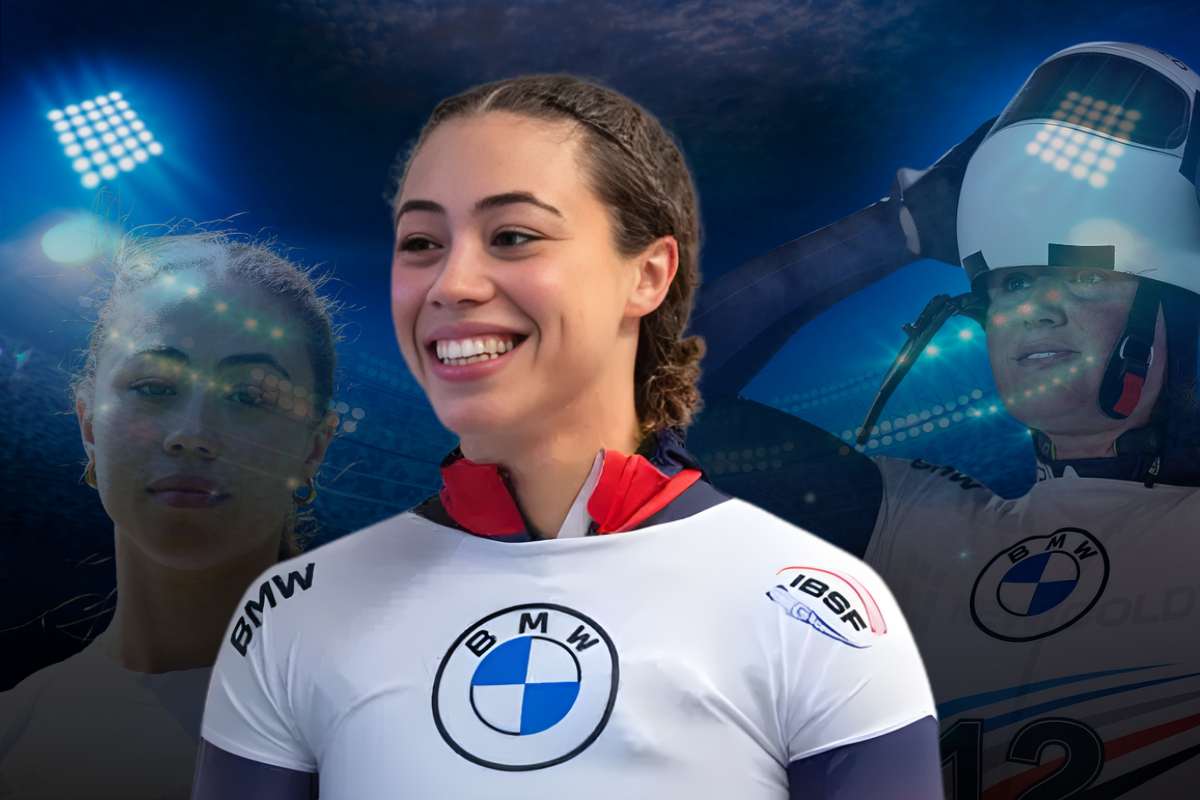
Here she is: Tabitha Stoecker, a British skeleton racer, has started making headlines for good reasons. She is now one of Great Britain’s newest Winter Olympic champions, having won gold in the mixed team skeleton event at the 2026 Milano-Cortina Winter Olympics alongside Matt Weston. She is also a two-time world silver medalist in the same event. This woman decided to seize an opportunity that life threw at her, and she made history. Let’s walk you through who she is and the wins that got everyone talking.
Early Years in London
Tabitha Clare Stoecker was born on November 24, 2000, in Highgate, London. She has always loved sports, and she was a British schools gymnastics champion.
She got into something more unusual: the circus. Yep. The circus.
Around age 11, she attended a workshop at the National Centre for Circus Arts in London and fell head over heels for aerials, trapeze, juggling, clowning, and all. For six years, she trained, flying high, learning the impossible, pushing limits.
ALSO READ: Capsule Wardrobe Guide for Beginners: Build a Closet You Actually Love
Skeleton? How Did That Happen?!
Skeleton is a winter sliding sport where athletes hurtle head-first down an icy track on a tiny sled at speeds approaching 90mph. It’s thrilling yet terrifying. And for many British athletes, it’s discovered through a talent programme called Discover Your Gold, which Tabitha Stoecker participated in in 2019.
She said on BBC Breakfast on Monday that she got into this game by chance when she saw an ad about it and decided to apply.
“I saw an advert on Instagram for Discover Your Gold Talent ID process and got selected for skeleton, and I guess the rest is history,’
But the transition started making sense: body control, fear management, focus under pressure, all qualities she’d refined in gymnastics and circus training, are what shaped her, and as she told Radio 4’s Today programme, it helped her to be prepared for the adrenaline of skeleton.
By 2021, she was competing in the Europa Cup, finishing in the top ten on her debut, and in 2022 and 2023, she earned silver medals at the Junior World Championships.
In 2023, she became Junior European champion and also won her first senior World Cup race, which is a huge milestone.
ALSO READ: What Is Jonathan Davino’s Net Worth in 2026? Career, Businesses & Relationship Explained
The Road to the Olympics
Between 2023 and 2025, Stoecker competed, and she did well. Her World Cup and Championships results steadily improved, and she became known for consistency and composure under pressure.
In mixed team skeleton events, a pairing of a male and female slider from the same country, she had already won World Championship silver medals twice with Matt Weston.
I mean, that partnership was something special: Two athletes with different strengths. One unbeatable start, the other with lightning speed. A chemistry unfolding on icy tracks half a world away from London. And it set the stage for what was coming.
ALSO READ: Super Bowl 2026: Seahawks Crush Patriots 29–13 in Historic Night of Football and Culture
Milano-Cortina 2026: A Golden Moment
Fast-forward to February 15, 2026. It was the final weekend of the Winter Olympics in Milano-Cortina, Italy, and Team GB was riding high. The skeleton track buzzed with energy. Britons were cheering.
Tabitha had already finished fifth in the individual women’s skeleton event, a great result, but there is more.
But this mixed team sled was the big one.
The new skeleton mixed team event was debuting at the Olympics. It’s like a relay: the woman slides first, then the man, combined times deciding the winner.
Tabitha took the first leg. Her run was strong, competitive, and set the team up nicely, but they were trailing the German pair by a fraction.
Then came Matt Weston, arguably Britain’s most dominant skeleton athlete of the Games (already a gold medallist in the men’s singles).
Weston delivered a remarkable performance with lightning speed, perfect line, and that’s it! Britain took gold by just 0.17 seconds.
In a sport timed to hundredths of a second, that’s a blink. And for Tabitha Stoecker and Matt, that was gold.
When she stood on the podium with the British flag behind her, a gold medal around her neck, it was a well-deserved medal.
After the race, people and fellow British athletes didn’t stop praising them. Olympic champion Amy Williams described the win as “phenomenal”.
ALSO READ: Eirik Horneland From Norwegian Defender to Aberdeen’s Leading Managerial Candidate
What Makes Stoecker Special?
There are loads of skeleton racers. But what sets Tabitha Stoecker apart?
1. Fearlessness
Not many people glide head-first at 80+ mph for fun. But Tabitha? She zooms down icy tracks because it feels right.
2. Cross-disciplinary strength
Gymnastics taught balance. Circus taught poise. Skeleton taught grit. The mix is part of the reason she shines.
3. Team player energy
In the mixed event, her start set Matt up. That’s trust. That’s partnership. That’s real teamwork.
ALSO READ: Best Movies to Watch in 2026 | Upcoming Films & Must-See Releases
British Skeleton Dominance
It wasn’t just a one-off. That night capped one of Great Britain’s greatest days in Winter Olympic history, three gold medals across sports, and a moment the country will be talking about for years.
And because skeleton has been so successful for Britain, and now with stars like Tabitha Stoecker leading the way, interest in the sport is skyrocketing.
Natalie Dunman from the BBSA said, “We’re delighted to see so many people wanting to try the sport and looking to emulate Matt and Tabby by becoming an Olympic Champion.
“Matt, Tabby, and all our GB athletes started in the sport by signing up similarly, so we’re confident there could be future Olympic medallists among them”.
There is a surge in people signing up for talent programmes. Buzz in schools. Kids dreaming of sliding tracks instead of football pitches.
ALSO READ: Who Is Cory Hein? Inside the Rise of a People-First Leader at Teck Resources
What’s Next for Tabitha?
So what happens after an Olympic gold medal?
Well, more medals, probably. More races. But also more influence:
- inspiring young athletes
- boosting women in winter sports
- standing as proof that the gritty, unconventional path can absolutely lead to gold
She’s only 25. Whatever direction she goes next is up to her, but this is just the starting point.
Tabitha Stoecker’s Olympic journey isn’t just about winning gold. It’s about courage. Adaptability. Believing in yourself even when most of the world has no idea who you are.