What NVIDIA’s Report Earnings Means For Tesla and Robotaxis
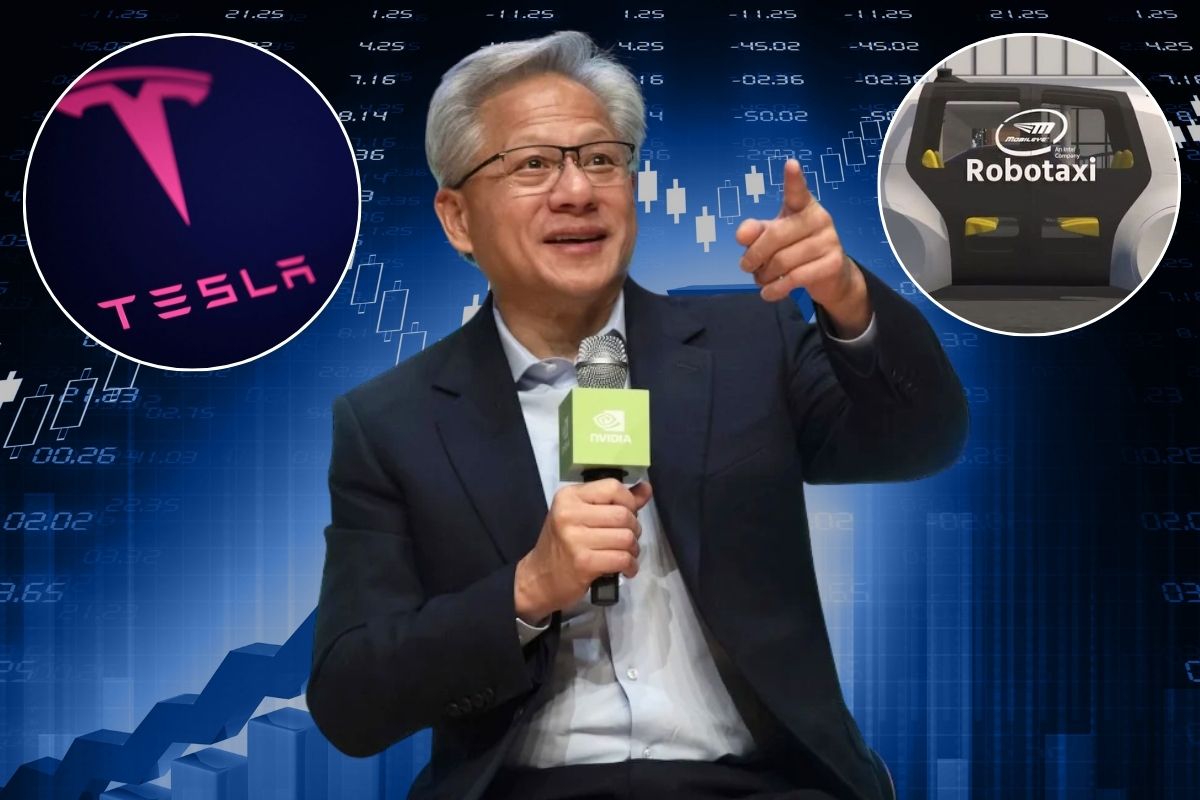
Last week, NVIDIA dropped its Q3 2025 earnings report, and it was a showstopper. Revenue came in at $57 billion, far above what most analysts expected, marking a 62% year-on-year jump. Profits also beat forecasts: earnings per share hit $1.30, topping estimates.
On the earnings call, CEO Jensen Huang didn’t mince words: he said they’re witnessing overwhelming demand and signaled that this quarter isn’t a coincidence but part of a broader trend. As he put it, the infrastructure that supports advanced computing, including data centers, chips, and robotics hardware, is booming. He mentioned “AI chauffeurs like Tesla FSD and Waymo,” while discussing the AI frontier.
Many have jumped on the AI bullish market, following Nvidia’s earnings and this is expected to keep growing well into 2026.
NVIDIA just proved that the backbone of next-gen computing is not only very much alive, but growing faster than many dared hope.
Why These Ripples to Tesla And The World of Robotaxis
So why does a chip company doing well matter for Tesla? Because Tesla isn’t just an EV maker anymore. The market increasingly treats it as part of the same “tech and autonomy” league as the big AI and infrastructure plays. And when NVIDIA flexes its muscles, it breathes life into that narrative. Easy to see.
Reports show that after NVIDIA’s earnings, Tesla stock jumped briefly as investors got that jolt of optimism. For many, it’s a reminder: if the underlying hardware needed for autonomous driving and robotaxis is scaling up, then Tesla’s vision isn’t so far-fetched.
Analysts have been calling NVIDIA’s results a “champagne moment.” It’s like the foundations of a towering building just got reinforced. And Tesla? Their building plan for robotaxis and autonomy could rest on those foundations.
Also read: Life After COVID
Where Tesla and Robotaxi Stand
Remember that in June 2025, Tesla quietly rolled out its first real-world robotaxi service in Austin, Texas. At first, it was a small handful of vehicles with “safety monitors” in the front seat. However, Tesla CEO, Elon Musk plans to remove the “safety monitors” by the end of 2025. This can be the next catalyst for Tesla stock.
But it was a statement: this was no longer a concept, but a live service.
Since then, there’s been word that Tesla plans to double the Austin fleet soon. The company has even suggested it might expand to 8–10 major U.S. metro areas by the end of the year.
That ambition sounds like the future. And with NVIDIA’s boom, the “infrastructure” worry, will there be enough raw power, enough computing backbone? seems less scary.
Yet, making robotaxis work at scale isn’t only about hardware. As some critics and insiders warn, the road to fully autonomous, safe, reliable robotaxi service is still long.
One striking voice belongs to Andrej Karpathy, Tesla’s former head of AI for driving systems. On a recent podcast, he said he would “push back” on claims that the recent advances mean “all the tough problems” are solved. In other words, some of the biggest technical and safety challenges remain.
And regulatory hurdles, public trust, and real-world unpredictability? Those don’t disappear just because chips are cheaper and data centers are humming.
Moreover, next year will see the rise of robotaxis as Waymo, Amazon’s Zoox, plans to expand to the U.S., not to mention the several Chinese players operating in China and the Middle East.
What Could Happen Now?
If things go well… If hardware keeps improving, if Tesla nails the software, if regulators don’t throw up roadblocks, then we could see a real inflection point. Robotaxis could scale beyond pilot zones like Austin. They could become a living, breathing transport option that people actually use.
That could reshape mobility not just for Tesla, but for how we think about cars altogether. Ownership becomes optional. Rides transform. Urban mobility, traffic, and emissions will all change.
For Tesla, that would mean a shift from being just a car company to something more like a mobility platform. A service. And maybe, eventually, a major profit center.
But there’s a flip side. If Tesla stumbles, if autonomous driving remains glitchy, if public confidence falters, if regulation tightens, the whole vision could wobble.
In that scenario, all the hype and all the stock-price uplift tied to it could fade. And the fact that NVIDIA is doing great wouldn’t mean much if Tesla can’t deliver.
What Does it All Mean?
NVIDIA’s blockbuster results are more than just a strong quarter for a chipmaker. They’re a signal. A signal that the world is doubling down on building the systems needed for machine-driven mobility and robotics.
For Tesla and its robotaxi ambitions, this is a shot of adrenaline. It’s validation from the market that the foundation beneath autonomous mobility is getting sturdier. It’s the kind of signal that can attract capital, talent, and patience.
But the real test is still ahead. Because ambition without execution… well, that’s just dreaming. And in the world of robotaxis and autonomy, dreams better turn real or they crash.