Can AI Replace Human Writers in 2025? The Truth Behind the Fear, the Hype, and the Future
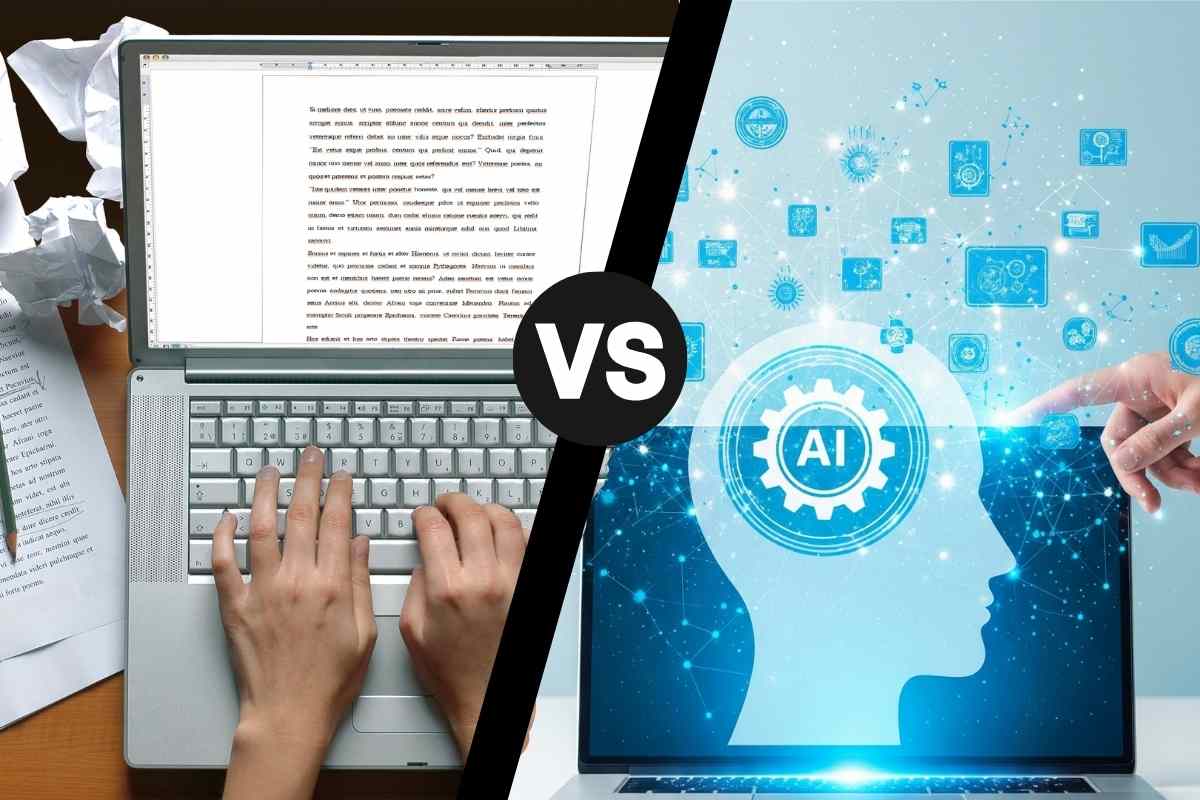
If you’re a writer in 2025 or you work anywhere near words, you’ve probably asked yourself this question at least once, maybe late at night, maybe while scrolling job boards, maybe while watching another “AI can write articles in seconds” video pop up on your feed.
Can AI really replace human writers?
Simply put, no.
But there is no lie that AI is changing the game in writing. Dramatically. Some roles are disappearing. Some are evolving. Some writers are quietly thriving while others feel completely left behind.
So let’s explore this, looking into AI roles in writing and how writers are leveraging AI for success.
Also read: Mayci Neeley, Arik Mack, and the Love That Changed Her Life
Why This Question Even Matters in 2025
AI writing tools didn’t just appear overnight. They crept in.
First, it was grammar suggestions. Then headlines. Then full blog posts. By 2024, AI was generating marketing copy, news summaries, social captions, scripts, and even books.
By 2025, it’s everywhere.
According to industry reports, over 70% of marketing teams globally now use AI in some form for content creation, and nearly 60% of businesses say AI has changed how they hire writers. That’s not nothing.
So when writers worry, they’re not being dramatic, they’re being realistic.
But realistic doesn’t mean doomed.
What AI Is Actually Good At
AI excels at speed. Relentless, tireless speed.
It can:
- Generate thousands of words in seconds
- Rewrite content endlessly without complaining
- Summarize long documents instantly
- Optimize text for search engines
- Produce structured, predictable content at scale
Need 100 product descriptions that sound roughly the same? AI can do that before you finish your coffee.
Need SEO-friendly blog posts targeting specific keywords? AI thrives there.
Need quick drafts, outlines, FAQs, or meta descriptions? Done.
This is why AI has already replaced some entry-level, repetitive writing tasks. Think content farms. Think bulk SEO pages. Think low-pay writing gigs that were already stretched thin.
Where AI Falls Flat (And Always Will)
Now here’s the part people don’t talk about enough.
AI doesn’t live.
It doesn’t feel awkward silence. It doesn’t experience grief. It doesn’t know what it’s like to fail publicly or love deeply or doubt itself at 2 a.m.
And that shows in the writing.
AI struggles with:
- Original thought
- Emotional depth
- Lived experience
- Cultural nuance
- Humor that isn’t predictable
- Taking creative risks
It can sound convincing. Smooth. Polished.
But often, it feels hollow.
You’ve probably read AI-generated content and thought, “This says a lot without really saying anything.”
Exactly.
Because real writing doesn’t just inform, it also connects.
And connection is still human territory.
The Limitations No One Likes to Admit
AI also has very real limitations that affect trust.
It can:
- Get facts wrong confidently
- Invent sources that don’t exist
- Miss context
- Flatten complex topics
- Repeat patterns instead of creating meaning
In journalism, academic writing, memoirs, opinion pieces, and investigative work, these flaws matter a lot.
That’s why many publishers now require human verification for AI-assisted content, and why AI-only writing still struggles with credibility.
Speed is impressive. Accuracy and insight are non-negotiable.
Where Writers Are Feeling the Impact Most
Let’s not sugarcoat this.
Some writers are being affected.
Especially in:
- Low-cost SEO content
- Generic blog writing
- Basic social media captions
- Product descriptions
- Repetitive web content
Many companies now expect writers to “use AI” rather than replace it or they hire fewer writers and ask one person to do more.
That shift can feel brutal.
But here’s the thing: This doesn’t mean writing is dying. It means cheap writing is dying.
The Rise of Human + AI Collaboration
Here’s where the story changes.
The writers who are thriving in 2025 aren’t fighting AI.
They’re collaborating with it.
They use AI to:
- Brainstorm ideas
- Create rough outlines
- Speed up research
- Edit drafts
- Break writer’s block
Then they step in and do what AI can’t.
They shape the voice. They add insight. They bring emotion. They tell stories.
Moreover, human writers are the best for:
- Writing niche authority content that positions you as a thought leader in the industry.
- Brand storytelling that requires emotion and connection.
- Editing of AI-generated content to check bias, include tones, and align with the brand’s voice.
AI is like that smart assistant that still requires human supervision. Writers who understand this aren’t being replaced.
They’re becoming more valuable.
Why Human Writers Still Matter (More Than Ever)
Here is the truth: As AI content floods the internet, human writing actually stands out more.
Readers are craving:
- Authentic voices
- Personal stories
- Honest opinions
- Writing that feels alive
Google itself has started prioritizing experience-based content, articles written by people who’ve actually lived what they’re talking about. Because trust matters, and it can be built through human, not machines.
What Writers Need to Do to Stay Relevant in 2025
This isn’t about working harder; it’s about working smarter.
Writers who thrive now:
- Develop a clear voice
- Build a personal brand
- Focus on storytelling
- Learn SEO
- Use AI as a tool, not a crutch
They don’t compete with machines on speed.
They compete on meaning.
Can AI Replace Human Writers in 2025?
Not completely.
AI can replace tasks. It can replace some roles. It can replace uninspired, interchangeable content.
But it can’t replace perspective, empathy, and lived experience.
And it can’t replace a writer who knows how to make someone feel something.
Not now. Not in 2025. Probably not ever.
Also read: Is Clairo a Nepo Baby? The Truth Behind the Internet Debate
The Bottom Line
If you’re a writer reading this and feeling uncomfortable. Well, change is sometimes like that. The good news is writing has survived printing presses, typewriters, computers, spellcheck, and the internet itself. It’ll survive AI too.
The future doesn’t belong to AI alone. It belongs to writers who adapt, evolve, and remember why they started writing in the first place.